Physical Address
304 North Cardinal St.
Dorchester Center, MA 02124
Physical Address
304 North Cardinal St.
Dorchester Center, MA 02124
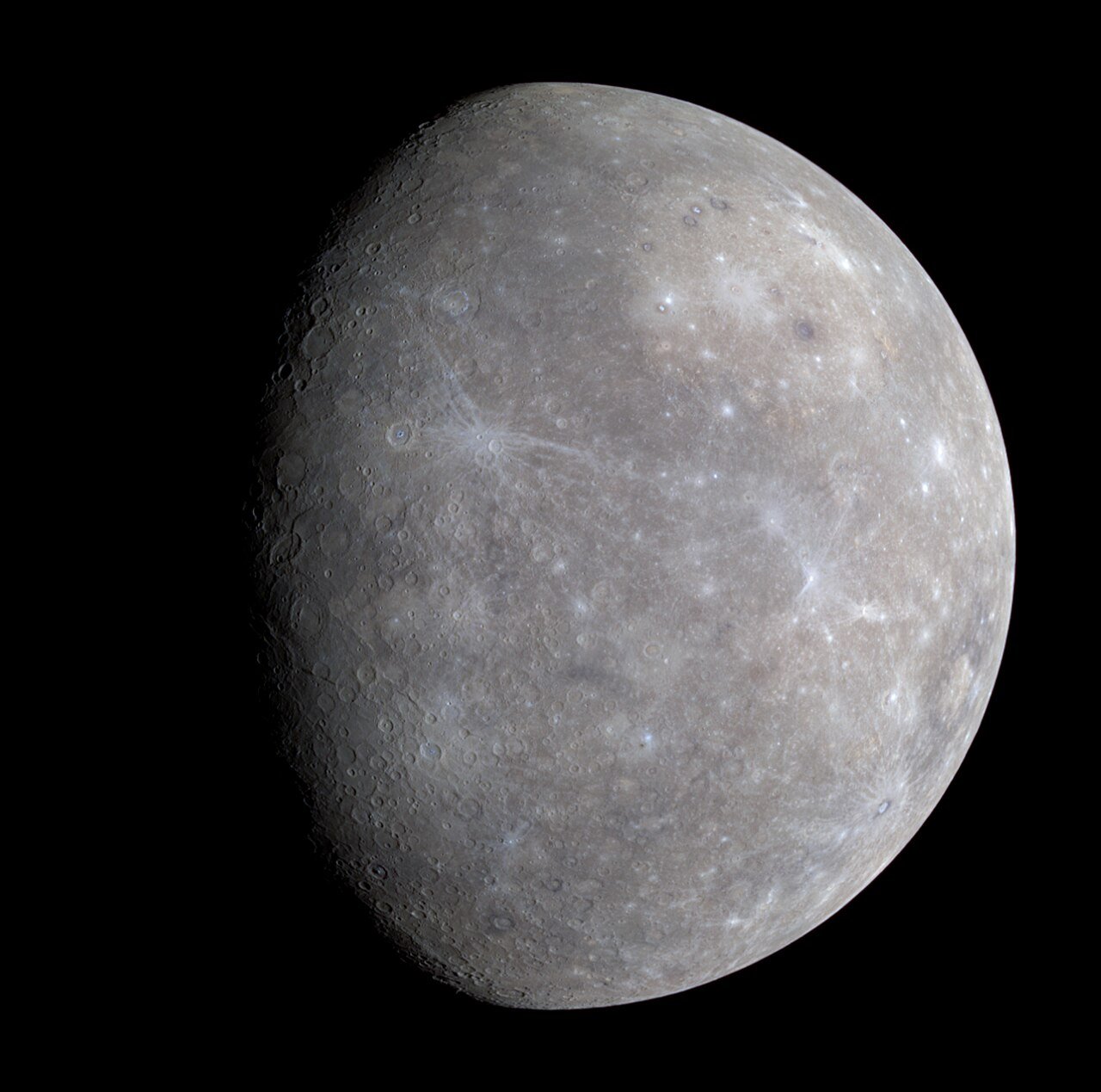
Just as the skin of a drying fruit wrinkles as it shrinks, the planet Mercury has crumpled into ridges and cliffs over billions of years as its interior cooled. But new research suggests the small planet has shrunk far more than its visible surface scars reveal – by as much as 40 percent more.
Mercury is the smallest planet in the solar system and the closest to the Sun. As its massive iron core cooled over time, the entire planet contracted, folding its rocky crust into craters, ridges, and steep cliffs that spacecraft have photographed for decades.
Until now, scientists estimated Mercury’s contraction by counting its visible tectonic features. The new study identified masked tectonic structures – deformation hidden beneath the surface and disguised by other terrain – indicating the true contraction is roughly 40 percent greater than the visible scars alone indicate.
The finding forces a rewrite of models describing Mercury’s interior and thermal history. It also offers lessons for other rocky worlds, including Earth, Venus, and Mars – a reminder that planets keep evolving long after their formation, and that the most important evidence is sometimes the kind you cannot see.
Source: planetary science study, reported via Phys.org.
Featured image: File:Mercury in color – Prockter07 centered.jpg (NASA/Johns Hopkins University Applied Physics Laboratory/Carnegie Institution of Washington. Edited version of Image:Mercury in color – Prockter07.jpg by Papa Lima Whiskey., Public domain) via Wikimedia Commons