
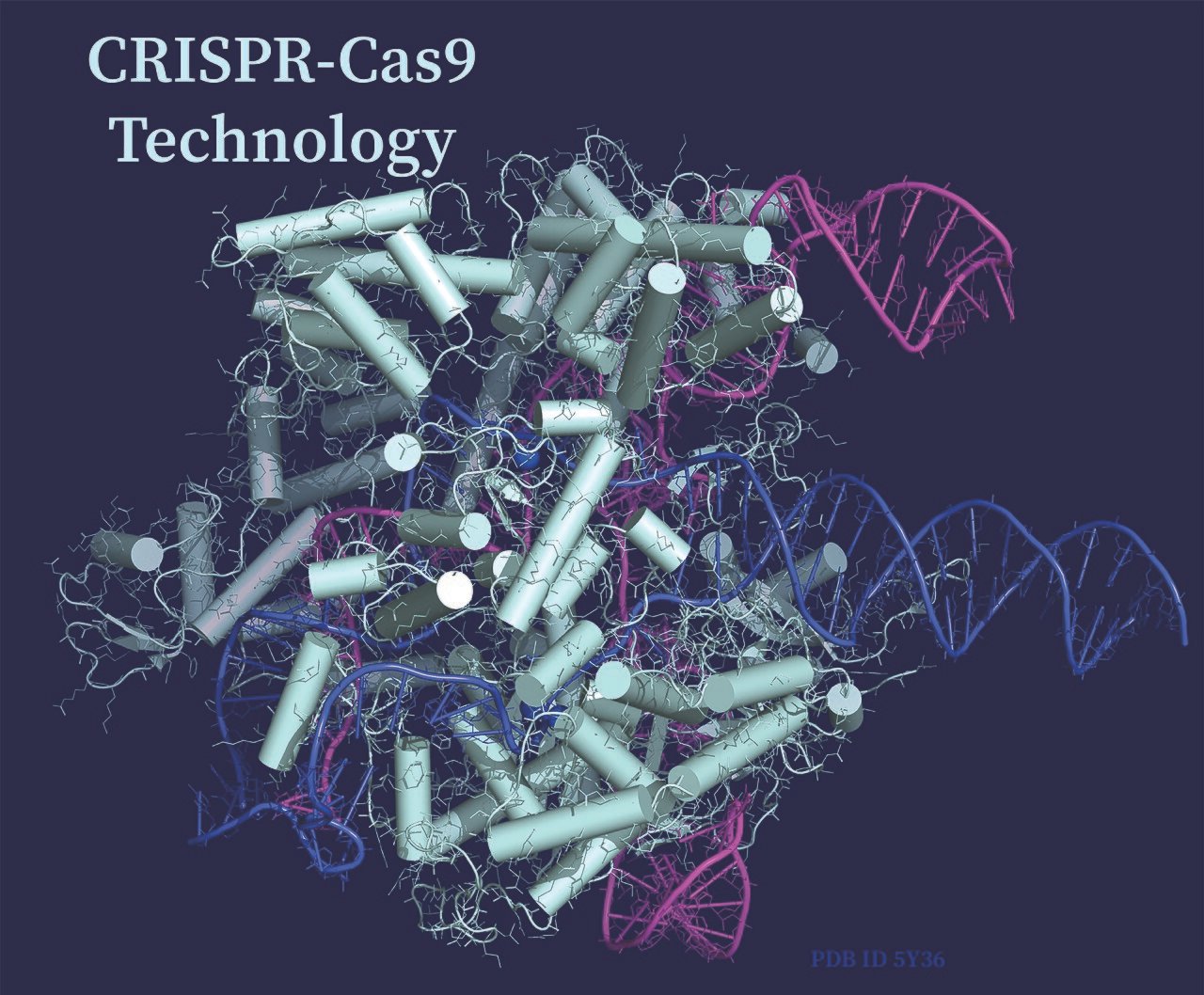
CRISPR gene editing did not spring from nowhere. Two new studies published in Science trace the origin of CRISPR-Cas systems back billions of years to a much simpler RNA-guided defense system that evolved inside viruses themselves, before bacteria ever adapted it into the immune system researchers now use to edit DNA.
CRISPR systems rely on RNA guides that find matching DNA sequences, and their behavior can be reprogrammed by simply changing that guide sequence. Scientists have long understood how CRISPR works in bacteria, but the deep evolutionary origin of its core RNA-binding proteins — the ancient “RAMP” proteins found in the most abundant class of CRISPR systems — remained a mystery.
To trace that lineage, the research team used a structure-based search to hunt for RAMP-like proteins across bacterial and viral genomes. That search turned up a previously unknown RNA-binding protein the team named VIPR (Viral interference programmable repeat), paired with a small guide RNA called vrRNA. VIPR turns up most often inside rival bacteriophages — viruses that infect and destroy bacteria — suggesting it evolved as a weapon in an ancient arms race between competing viruses fighting for control of the same bacterial host.
The researchers propose that bacteria eventually hijacked VIPR from the viruses that carried it and repurposed it for their own defense, a process that over time gave rise to the CRISPR systems found throughout the microbial world today. Direct proof of that transition is still missing, but the team says finding an intermediate system between VIPR and modern CRISPR would strengthen the case.
VIPR itself works in an unusual way. Rather than matching its DNA target as one continuous stretch, like CRISPR does, its guide RNA uses a “skip-one” code — reading two DNA letters, skipping one, then reading two more. In lab tests, VIPR successfully bound DNA, silenced a fluorescent reporter gene, and protected E. coli from an invading phage after being reprogrammed with a new guide sequence. Structural imaging showed VIPR pries open DNA by wrapping RNA and both DNA strands into an unusual three-stranded shape, a mechanism distinct from the DNA-unwinding tricks used by CRISPR.
Because it is smaller and structurally simpler than CRISPR-Cas9, the researchers say VIPR could become one of the most minimal and versatile platforms yet for RNA-guided DNA recognition — with potential uses in genome editing, imaging specific DNA locations inside cells, and epigenetic modification. Understanding how genetic switches hidden in our DNA actually function could benefit from tools this precise, and the discovery adds another data point to how much is still being learned about the code written into our DNA and the mechanisms researchers are now using to probe conditions like the genomic changes linked to Alzheimer’s disease.
The findings were published in two companion papers in Science, with a related perspective piece describing the viral origin of RNA-guided immunity.
Sources
Yoon et al., “A noncontiguous code for RNA-guided DNA recognition at the origin of CRISPR-Cas,” Science (2026)
Yoon et al., “VIPR RNA-guided DNA recognition by noncontiguous geometric triplex formation,” Science (2026)
Bravo, “A viral origin for RNA-guided immunity,” Science (2026)
Phys.org coverage
Featured image: “CRISPR Cas9 technology” by Elena I Leonova, CC BY 4.0, via Wikimedia Commons.